

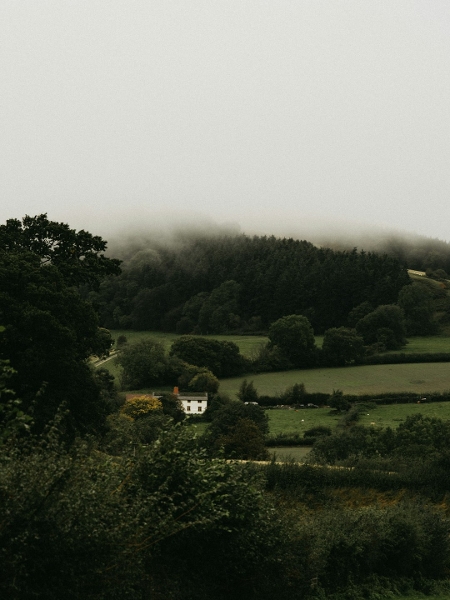
Photo by Annie Spratt on Unsplash
Ben
In 1985 I was approached by my friend and collaborator Mike Shipley to co-produce a solo album by Benjamin Orr, the bass player and singer with The Cars, the great Boston-based rock band that I had listened to and loved for quite a number of years.
The Cars of course were a synth-driven band that for me bridged a beautiful pop sensibility with a minimal post-punk musical language. I had become aware of them in 1977, when their album "The Cars" came out, and "Just What I Needed" became a huge hit record. At that point I was thoroughly immersed in the jazz world, but as always has been the case, I was a dedicated musical omnivore, and loved the simple and direct quality of the music on their first album, as well as the minimalist lyric language that they developed. Although it was bare-bone simple, the songwriting always felt informed by a sensibility that was smart in a way that lacked self-consciousness or intent.
Ric Ocasek was the principal songwriter in the band, and his aesthetic seemed to dominate the songwriting that drove the band, while Greg Hawkes' synth parts and Elliot Easton's guitar playing were signature musical drivers, along with Ben's solid bass playing along with David Robinson's drumming forming the foundation. Ocasek sang the songs that suited his original style that incorporated clipped phrasing with a half-sung, half-spoken quality, while they saved Ben's voice for songs that could accommodate the blend of clipped phrasing that was part of the band's signature with a bit more of a conventional lyrical melodic slant. I loved that there was that contrast between the two of them, while sharing the same sharp sense of phrasing.
They followed that inaugural album up with "Candy-O" and "Panorama", which were just as strong. After these two records they made a very big departure and decided to work with record producer/songwriter Mutt Lange. "Heartbeat City" was the result of their collaboration. Mike Shipley worked with Mutt on that exceptional and very different album.
I had worked with Mike on the "Dog Eat Dog" album project that we co-produced with Joni. I had become aware of Mike's work on Thomas Dolby's beautiful album "The Flat Earth". The elegant and painterly quality of Mike's mix work combined with Thomas' work incorporating the Fairlight CMI on that album was fresh and exciting to me. Mike was the engineer that I had been looking for, and Joni agreed that he would be a great engineer to collaborate with in giving things a new and different kind of sonic depth in approaching her next album project. Thomas, as well as being a lovely singer and songwriter, had a stunning and original way of approaching synthesizer keyboards and the CMI.
"The Lace"
The idea of working with Ben Orr was exciting to me. It was 1985, and I had been working on learning to program the Fairlight CMI, which was the first digital musical instrument. When the instrument began to be used in pop music the idea of learning to program and utilize the instrument was irresistible to me. Other finely crafted records began to appear that used this technology in a way that was new and fresh ground. The Yes album "90125" and the 10cc track "I'm Not In Love" were good examples of the creative territory that this new instrument opened up. I began frequenting the Fairlight sales office on Westwood Blvd in L.A., and managed to set up meeting one of the sales reps at the office at 5:30am, before the office opened, to give me programming lessons on this new instrument. The braiding together of organic musical elements and elements that were digitally sampled and manipulated, and played organic colors opened up a whole new area of musical possibilities that was a compelling palette to work with. I had already been experimenting with the Prophet, other keyboards and drum machines that were changing the musical landscape of that era, and the Fairlight was the next big step. By the time that we decided to take on producing Ben's album together, I had become somewhat facile with the Fairlight.
Mike and I had become close friends on "Dog Eat Dog", and had developed an almost telepathic musical relationship. I've been fortunate to work with greatly talented engineers, both from England and the U.S., and Mike had gone through the English hierarchical studio/engineer grooming system that turned out so many great recording engineers. This protocol consisted of starting out as a "tea-boy" (the term in the U.S. is "runner"), then progressing to job of assistant engineer, after which one was ready to take on the principle engineering job. This gives a young engineer time to not only master the technical area of the job, but to understand the interpersonal aspect of recording sessions, as the young apprentice is party to the discussions and conversational dynamic of working with an artist and producer. Mike had what to me was a great innate sense of proportions, excellent intuition in how to position parts and instruments in a track, and an extraordinary ability to use effects and reverbs in an intuitive way to create depth and space in a track. Joni and I would talk about how Mike even had artistry in the way that he touched the console when he would adjust e.q. and effects. He had mixing and engineering in his blood, and like myself, had lived and breathed all genres of music since he was a child.
Ben's album was beset with difficulties of different kinds right from the outset of things. It had been decided that we would work on the album at a relatively new residential studio in Somerset U.K. called The Wool Hall, which was in a tiny village called Beckington Near Bath. The studio was built in a building that dated back to the 16th century, when Beckington was a center of wool trade in Somerset. In the early 1980's it was bought by Tears For Fears and Max Hole, who was both a very successful record executive and one of the first wave of producer and engineer managers that had appeared in the music business. They turned the collection of beautiful old structures into a recording studio. Max managed Mike and came to manage me in the U.K., as well as becoming a good friend. Tears For Fears had recorded their album "Songs From The Big Chair" at the studio with the very talented producer Chris Hughes at the Wool Hall. Chris also produced a very good solo album for Ric Ocasek. In 1986 the studio was opened up as a commercial studio for other artists. It was a studio in the classic English residential mold, with one building that housed the recording studio and one that provided residential rooms and a big dining room and kitchen.
When the date came for me to leave L.A., Joni was dealing with recovering from a miscarriage. I felt very conflicted about leaving for a long period of time under the circumstances, but the studio was booked, and the rest of the recording team had already arrived there. I asked Joni whether she thought that I should go, and she said that she would be okay; that I should go. I came to realize that this decision would come back to haunt me later, as in retrospect she felt that I had left her alone to deal with the physical and mental aspects of her recovery by leaving. She felt that I chose work over her welfare and our marriage, and this did serious damage that turned out to be irreparable. My mother had three miscarriages when I was very young, but in our family, and perhaps in the ethos of the late fifties and early sixties, these things were not spoken about openly. Consequently, I wasn't aware of the gravity of the psychological aspect of the aftermath of a miscarriage.
The other incident that occurred leading up to us starting work with Ben was that when he was entering the U.K. Ben, who was quite excited to be finally making a solo album of his own, when coming through customs, proudly announced to the customs officer "I'm coming to England to work on my solo album!". The only problem with his making this enthusiastic declaration was that, as is quite often the case when artists and musicians go to foreign territories to record, none of us had a work visa for the U.K. The record company and his management had told him to simply say that he was visiting as a tourist. The customs officer responded "that's great", and promptly took him aside, subsequently placing him on a flight out of the country until he arranged to come back on a work visa.
The Wool Hall
After these initial hiccoughs, we settled into the work. Ben's album was what one could call a "control room album". The majority of the work putting together the tracks was done in the control room, as our plan was to build the infrastructure of album with sequenced drums and keyboard material, then to add guitars and other played organic instruments. This was a natural decision considering the character of Ben's demos, on which the blend of guitars and keyboards was quirky and different; a good representation of the general direction of the project.
In this time, with the level of technology available to every songwriter, artist and producer, demos are most times expected to be finished recordings. For an engineer or producer, there is a beauty to demos that are incomplete and are rough sketches of a song. They leave room for discovery and collaborative imagination. I still love to hear songs this way at the beginning of a project.
Mike, Paul (who was in charge of running the Steinberg sequencing software on an Atari computer), our assistant engineer, and I were generally in the control room working, and if Ben wasn't doing vocals in the downstairs to the tracking room, Ben and his right-hand man/assistant/factotum Thom spent the majority of the time in the lounge that was just outside of the control room.
Ben was a great singer, a solid rock bass player, and a prodigious pot-smoker. He smoked pot from the time that he woke up until he went to sleep. He might have even woke up during the night to smoke pot. His nature was that of a person given to the lifestyle that has been described in pot-parlance as "wake and bake". He and Thom would sit in the studio lounge and smoke from morning straight through into the evening. For Ben, the result of consuming pot in this way was to keep him in his natural state. He functioned in an absolutely normal way when maintaining this regimen. The other part of the environment that Ben and Thom created for themselves was to always have the television on, their viewing consisting of an undulation between old classic films and hard-core porn. For Pete, the Wool Hall's consummate studio manager, aside from his many other tasks that were more typical to the job requirements of the manager of a commercial recording studio, he was required to procure the porn films which at that time had to be acquired from a very specific type of video store. All of this meant that I spent as little time in the lounge as was possible.
Ben was a shorthand guy. I loved this about him. No small talk. Through each day, Ben would periodically come into the studio control room, and we would play him the state at which the track that we were working on was in. The ideas that we had been working on. When it came to his songs, he was very specific and discerning about every nuance and detail of the production. Also, my impression was that Ric had dominated the production decisions when it came to The Cars' records, so he was very happy to be able to finally be working in a situation where he could guide the production aesthetic. If we were on course, and the shape of the track was true to his vision of the songs, Ben would simply say "Yes!". At times he would want to hear a particular part of the production highlighted (solo'd in recording nomenclature). If the idea didn't fit with the his stylistic vision he would simply shift his head to one side, and with a big smile respond by saying "Well... we'll have it!" The lesson that this articulated for me at this early juncture of my production career was that it didn't matter how long you had worked on an idea for a track; that it was important to be absolutely merciless in the editing and revision process. If a part didn't feel essential it was just taking up space and making the core of the song more oblique. In the same way that every sentence of a short story is critical, a song on an album is a short art form, and every compositional element of it should serve the song in an essential way, otherwise it shouldn't be there.
After revising the musical situation on a part that he felt didn't work, I inevitably found that his intuition was exactly right; that there was a better way of coming at what I had been working on, or it didn't need to be there. I found his sense of design on his own music to be exactly right.
Peter
Genesis
In my middle school years I fell in love with the albums that the English group Genesis was making. I discovered their music on the 1972 album "Foxtrot".
Everything about the songwriting, production and live presentation involved in this album felt original and fresh to me. I became obsessed with carefully examining every element of each song the album. I sat in my bedroom playing along with each track and reading the lyrics for hours. I then backtracked, and bought 1971's "Nursery Cryme", and became obsessed in the same way with that album.
These albums felt like some kind of new musical version of magical realism to me, and the blend of sophisticated musical structure and darkly imaginative storytelling reminded me of the elegant and concise short stories of science fiction writer Ray Bradbury, who's stories I had fallen in love with. After spending a substantial amount of time studying that album, the next album of theirs that I found myself listening to endlessly was was "Selling England By The Pound".
Andy's Billiards And Pool, which was the suburban neighborhood joint that I could buy records at, was where I would trace the etymological thread of records that I loved. The guy behind the counter at this pool hall had an encyclopedic knowledge of every genre of recorded music, so I would sit and let him go through extended monologues about any album that I would go in to buy. I would usually come out of there with seven or eight albums, which I would go home and pore over endlessly; the album cover with the credits sitting in front of me.
I found this album just as compelling as I did the previous two. It was a natural progression of inspired songwriting, record production, and playing by all of the band members, and Peter's vocal presentation of the songs felt like great conversational storytelling, as it had on the previous albums that I had been fixated on. I was able to go to the Roxy Theatre in Hollywood to see the band in those early years, my parents driving me to and from the shows, as this was before I had my drivers license. The live shows were as inspiring and organically theatrical as the albums themselves were. Peter was a magical storyteller in the live setting, using make-up and theatrical costumes to assume the various surreal characters that were part of the allegory of each song.
When he departed the band and progressed into his solo albums, I continued following his conceptual development, marveling at the sonic language that each record possessed, and carefully observing the detail of how his songwriting and production were developing. I also loved the unusual ingenuity of how the musicians who were working with him on these albums were approaching the music. "Peter Gabriel 1 (Car), Peter Gabriel 2 (Scratch), Peter Gabriel 3 (Melt) and Peter Gabriel 4 (Security); each album was an exciting progression. I transferred my passion for detail that I had for Genesis' albums onto Peter's work when he went solo.
The "So" Session
The atmosphere in and around Bath had a element of synergy to it that I had never seen in a geographical area before. I had seen it in a studio context, at A&M Studios, Capitol, Village, and other studios in L.A that had multiple rooms, where artists and musicians would go from studio to studio, listening to what each other were up to, and perhaps even playing or singing on something that another artist was working on. In this case the feeling was spread over the many studios and artists who were working in various locations in this somewhat rural place. Everyone in the area knew what was going on at other studios that were somewhat nearby. There was an atmosphere of mutual inspiration. For me it was a small taste of the creative synergy that I've come to realize happens at certain times in certain places because of the proximity of a group of a kindred sensibility and aesthetic.
At the Wool Hall the nightly routine was that Marilyn, the "house mum", who looked after the coordination of all things relating to the residential area of the studio, would call the studio control room. All that she would say was "dinner", and we would all shuffle through the den of iniquity that was the lounge, across the driveway, and into the beautiful stone building that housed kitchen and the dining room, which had a fireplace that was big enough to walk into standing up.
One evening we had just sat down at the long wooden table that meals were served on, and Marilyn came in saying "Larry.... telephone.... it's Peter." I was puzzled, as I couldn't think of which Peter it would be... perhaps Peter Walsh, who was an English engineer that I had worked with? I picked up the phone.. "Larry? It's Peter Gabriel... how are you doing?" Initially I thought that perhaps someone was "winding me up", English slang for a gag of some sort, but after a couple of traded bits of conversation I realized that it was actually Peter Gabriel. "Would you be able to come over and play on a couple of tracks?" Stuttering a bit, I asked when he would like for me to come. We set up for me to come to his studio Ashcombe House the next evening, and I got directions.
"Music For Airports" was in my car as I made my way over to Peter's studio. I had taken to listening to one album for a week at a time as an exercise in going deep into one album for an extended period. The car was a great environment for this. The Brian Eno album had become the soundtrack for driving through the hedgerow-lined roads that distinguish many areas of Somerset. As I began to be able to sing the augmentated melodic structure of the album to myself, I felt that I had grasped what Eno was up to with this album and some of his other ambient albums; stretching melodic structure out to a point where it seemed random, but actually had a specific compositional character. It made me think of what Proust was experimenting with in the literary medium on "Remembrance Of Things Past", stretching the written sentence out to an extent where one could only really grasp the beauty of the the design in repeated readings (at least that was the case for me with Proust). I still see the hedgerows passing by at twilight every time I listen to one of Eno's series of ambient albums.
45 Mercy Street
I have been an ardent fan of Anne Sexton since I was in my early teens. My mother sat squarely in the valium-tinged dilemma that Sexton did; the in-betweens of the late fifties-early sixties, where middle-class mothers were still expected to be "homemakers" but found that being a member of the P.T.A. was a sadly inadequate creative driving wheel. They were in a double-bind. They would possess more of a social voice if they had a vocation, but there was pressure from many directions to stay home and look after all things domestic. Perhaps this conflict in my mother's psychology and my natural draw towards dark poetry and literature was why Sexton's poetry resonated so strongly for me.
When I got to Ashcombe House and got set up, Peter and Dan Lanois played me the first track that they wanted me to work on. It started with a Brazilian Forró drum pattern against what sounded like a Yamaha CS-80 chordal pad. As the vocal came in I realized that the song was a musical portrait of Sexton...
Looking down on empty streets
All she can see
Are the dreams all made solid
Are the dreams made real
All of the buildings
All of the cars
Were once just a dream
In somebody's head
She pictures the broken glass
Pictures the steam
She pictures a soul
With no leak at the seam
Let's take the boat out
Wait until darkness
Let's take the boat out
Wait until darkness comes
Nowhere in the corridors
Of pale green and gray
Nowhere in the suburbs
In the cold light of day
There in the midst of it
So alive and alone
Words support like bone
Dreaming of Mercy Street
Wear you're inside out
Dreaming of mercy
In your daddy's arms again
Tears started welling up, and I leaned over my bass. Peter was using one of my favorite Sexton pieces "45 Mercy Street" as a centerpiece for the song. I felt a searing sensation in my chest. In the Jewish tradition this is referred to as a circumcision of the heart. I had an instant and detailed mental polaroid of how to structure the bass part come to mind. I outlined my idea to Peter and Dan. There would be a muted low part that would become a partner for the surdo in the Forro rhythm and a fretless melodic part floating above it, punctuating the the vocal..
Pulling out the papers
From the drawers that slide smooth
Tugging at the darkness
Word upon word
Confessing all the secret things
In the warm velvet box
To the priest, he's the doctor
He can handle the shocks
Dreaming of the tenderness
The tremble in the hips
Of kissing Mary's lips
Dreaming of Mercy Street
Wear you're inside out
Dreaming of mercy
In your daddy's arms again
I felt punch-drunk. There's a feeling when you feel that you are in the very best musical environment to do what you do. This was Peter and Dan at the absolute top of their game. The production was as stunning as the song itself was. Loose and rough, but at the same time articulate. Every element integral to the feeling of the poem. Being able to paint the bottom of a record that resides at this level is being at the apotheosis of what the work of a bass player is for me. Tieing the rhythmic fabric together and framing the vocal in a way that also works to make the sonic picture work the way that it will best provide underscore to the lyric. When it works well, as in composing underscore for a scene in a film, you can feel it in your heart and on your skin.
"In Your Eyes"
They put the next track up. This one was built on a beautifully crafted African groove, with the intro and verse structure undulating between a B minor triad and G major. My bass part would be an additional part, as Tony Levin, a bass player that I have long admired, and Manu Katche had done the rhythm track before I got to the U.K. The drums that Manu had played had a natural looseness, but sat right on top of the beat as opposed to slightly behind, which is where one might normally expect to sit. Peter's vocal came in, and it was another diamond of a poem that struck me directly in the heart.
Love, I get so lost, sometimes
Days pass and this emptiness fills my heart
When I want to run away
I drive off in my car
But whichever way I go
I come back to the place you are
All my instincts, they return
And the grand facade, so soon will burn
Without a noise, without my pride
I reach out from the inside
I thought it best to nail the verse down with a repeated syncopated low figure that gave each 2-bar phrase a bit of forward motion to work against the 4-on-the-floor kick pattern that Manu was playing, with the Yamaha CP-80 piano holding long chords through each bar. As a bass player one is always juggling the rhythmic balance of the other instruments with the melodic and rhythmic motion of the melody. Along with this, the most important part of the puzzle is always compositionally supporting the poetry. For the chorus it felt best for contrast to really pin things down rhythmically after letting things open up a bit with longer phrases in the pre-chorus B Section. The 2-bar phrase that felt right in the chorus was one that both nailed things down rhythmically and added a bit melodic counterpoint to sit under the conversational rhythm of Peter's vocal.
In your eyes
The light, the heat
(Your eyes)
I am complete
(Your eyes)
I see the doorway to a thousand churches
(Your eyes)
The resolution of all the fruitless searches
(Your eyes)
I see the light and the heat
(Your eyes) I want to be that complete
I want to touch the light
The heat I see in your eyes
In your eyes
In your eyes
In your eyes
As the track goes into it's last section there is a low-end conversation between my bass, which is a foundational part, and wild percussive figures that Tony Levin had played. Tony was on the road with King Crimson at this point.
Again, when I finished playing on this song I had the relatively rare feeling of having done exactly what I love doing as a bass player. Additionally, Peter and Dan had the intuitive knowledge and security to let me use my own musical compass without additional guidance; just letting me know that what I was doing worked. I came to understand that this is what great producers do. If they have the right musician or arranger working on a track they let them work. They go against the tendency to feel like one has to control or define every aspect of a record. This way the musician or arranger is free to follow their nose in approaching an element, and they function at the very top of their game, as they are intrinsically invested in what they are doing. The insecurity of control is often the enemy of productive and interesting collaboration.
After Hours and T. Rex
After a couple of weeks of work Mike and I took to coming back over to the studio after dinner to listen to the day's work. We would often bring a bottle of wine over from the kitchen, and after a review of the work we would wander into conversation, laughing at the events that had transpired in The Den Of Iniquity Lounge, or an exchange with Ben when we had wandered from his aesthetic in search of something fresh to try. I began to work on instrumental ideas that I referred to as "scribble demos". As these pieces of music developed they became interesting instrumental tracks that could be turned into songs in the right context, with the right artist. About a month into the recording we were informed by the assistant engineer, who like most English tape-ops, lived in the tape locker, that the T. Rex Fan Club, who had been given possession of all of Marc Bolan's multitracks, stored the tapes there at the studio.
It doesn't take much imagination to know what came next. Both of us being somewhat religious T. Rex fans, we surreptitiously dug the multitracks out of the tape library and put them up, going through various songs that we loved and soloing up different musical components, feeling like time-travelers as we listened to the casual dialog between Marc, Herbie Flowers, who was a very inspiring bassist for me, Marc Volman and Howard Kaylan of The Turtles, and Tony Visconti, who was a producer who worked on many classic albums that Mike and I both loved. We would listen to these old multi-tracks into the night, putting up one song after another that we knew so well, drinking wine, enjoying our time-machine listening, then stumbling back over to the residential building to sleep a bit before getting up for work. We had slipped into the best part of making an album in a residential studio; the obsessive state where sleep is an incidental necessity, but not to get in the way of the creative process. No family, no friends, no commitments, no distractions, just music and the making of an album.
Robert
Ben's album continued to take shape. I took to rushing through the cloud of smoke in The Den, hurriedly waving to whoever was present as the porn-ante had been raised, and our poor studio manager Pete had been forced to seek out German pornography of a more extreme and disturbing nature. Though a source of macabre humor for Mike and I, we desperately tried to find ways not to have to stop to converse in the increasingly degenerate atmosphere that we had to walk through in order to get to the control room.
The word of mouth network in Somerset led to another phone call coming into the kitchen phone. This time it was Robert Plant, who was calling for Mike, and inquiring as to whether he and I might be interested in working with him, as he was preparing to put together a new project. It goes without saying that both Mike and I were religious students and fans of all of the Led Zeppelin albums, and the idea of working with Robert was incredibly exciting. Robert and Jimmy Page had undeniably changed the entire musical landscape of an era, and the albums still hold up as work that could have been done yesterday.
On one call Robert asked whether either of us had any music that we were working on, as he was looking for musical fragments or tracks that could be starting points for him to work on lyrics, as well as stimulus toward a new direction for him. He described us getting together with a group of great musicians and searching for a new road forward through improvisation. Robert described how he saw us working in great detail. "We can set up in a circle, with me in the middle, and we can just start working on different grooves and ideas. I'll be perched on a stool in the middle of you all." But he was also looking for pieces of music to work with as a starting point.
I decided to take a crazy leap and send a cassette with three of the demos that I had been working on after-hours on it. To my surprise, Robert was very enthused about them, and wanted to work on lyrics for these pieces of music. This was beyond a surreal turn of events for me. The idea of collaborating on songs with a musical hero like Robert was a dream to say the least.
Joni
I had been in the U.K. far longer than I had expected. I had departed Los Angeles under a somewhat dark cloud of uncertainty. Once I was settled in Somerset, and we were working on Ben's album it became apparent that though Joan had told me that I should go as scheduled, that she deeply resented me actually having left her alone. Sitting on the plane to Heathrow, I already had an intuitive sense that beneath her telling me that it was okay to go, I suspected that she wanted me to insist that I should stay and help her deal with the psychological and physical aspects of her recovery from the miscarriage. I had not yet learned that in a marriage or relationship that one could not always simply trust what another said they needed from you; that there are times that you might have to disregard what the other person tells you, and trust your intuitive feeling of what they need or want you to do.
Phone conversations became forced and awkward. We finally agreed that it was important for us to see each other, and that she should come over to Somerset to stay with me for the duration of the project. We rented a cottage in a village nearby called Frome, and I moved there in anticipation of Joan's arrival. Once we were settled I told her about the possibility of things developing with the Robert project. I turned on the boombox that we had there and excitedly played her the pieces of music that I had given him. Her response was something that I could never have anticipated.
Upon hearing the demos she took a drag off of her cigarette, tipped her head sideways, and smiled. "You have to give them to me!" I laughed nervously. "I already gave them to Robert!" She responded by saying "you have to give them to me.... I'm your wife!" I suddenly realized that she was serious. "You want me to call Robert and say that I have to take those tracks back??" Again she said that she wanted them for her album, and that she needed me to let her write to them.
The phone call that followed would have to be one of the most difficult calls that I have ever had to make. When I informed Robert that I had to take the music back from him there was what seemed like an interminable pause on the line..... "if it was anyone else, Larry...(pause)..... I would be very angry. Since it's Joni though... (pause).... okay." It goes without saying that our involvement in the Robert project didn't move beyond this phone call.
Chalk Mark In A Rainstorm
When work was finished on Peter's album I told him that Joni was coming over, and that she had some music that she wanted to start working on. "Use my studio.... I'm done with my album".. Peter generously offered for us to work on Joan's album in his studio. Every day I would start work at the Wool Hall on Ben's album, then drive her over to Peter's studio to start work there, then drive back to The Wool Hall to continue work. Once we finished work there I would drive back over to Ashcombe House, where Joan was working on the initial tracks for what was to become Chalk Mark In A Rainstorm.
Some nights she was in the midst of investigating an idea for a song when I got there, and some nights we would work together on a track. Joni naturally tends toward working until the very early morning hours, starting at about 4pm. Around 4am we would drive back to the cottage together, wending through the hedgerows just before dawn, then I would be up at about 9am to start work again on Ben's album at 10. Through this whole period I got about 4 hours of sleep a night, but I rarely noticed the lack of rest. I find that when I am working on projects that are creatively satisfying, that the creative process and the adrenaline that accompanies it defeats natural fatigue.
The dynamic of cross-pollination that I had found in this little corner of the English countryside continued to affect the work that we were doing on the songs that Joni began working on. Ben sang background vocals on "Number One" and "The Beat Of Black Wings" and we asked Peter to do a duet on "My Secret Place", which was a song that Joan had initially written at director Albert Magnoli's request for Prince's "Purple Rain, but that ended up not working for the film. We ended up having the vocal undulate back and forth between Peter and Joni as a musical conversation. Many nights we would go into the house and sit with Peter, talking philosophy, Native-American theology, painting, and a plethora of other topics. There was a lot of laughing, and sharing of personal history. It was utterly comfortable and pleasant. At a certain point Joan informed Peter that she didn't like a particular green chair. He just laughed, and the moment passed. The next evening she did a line drawing on the green fabric chair with a silver magic marker. I had a bad feeling. Subsequently, when Peter saw the original art work he was not amused. The one uncomfortable moment of a blissful period of time at Peter's studio.
This daily creative crop-rotation was my routine through the long period of time that I spent in Somerset that year. There have a been few periods in my life that were as creatively satisfying as was this time in the English countryside. This one was my own little metaphorical microcosm of 30's Paris. Constant creative overdrive. The studio dining rooms were my personal La Coupole.
Copyright protected material on this website is used in accordance with 'Fair Use', for the purpose of study, review or critical analysis, and will be removed at the request of the copyright owner(s). Please read Notice and Procedure for Making Claims of Copyright Infringement.
Added to Library on January 5, 2026. (289)
Translate this page:
Follow Joni Mitchell



Comments:
Log in to make a comment
alysheba on :
Larry 's recollections are miraculous and so interesting ... his quote " The insecurity of control is often the enemy of productive and interesting collaboration " can be applied to all walks of life !